Story
24 June 2024
IOM Upgrades Border Posts in Upper East Region to Enhance Security
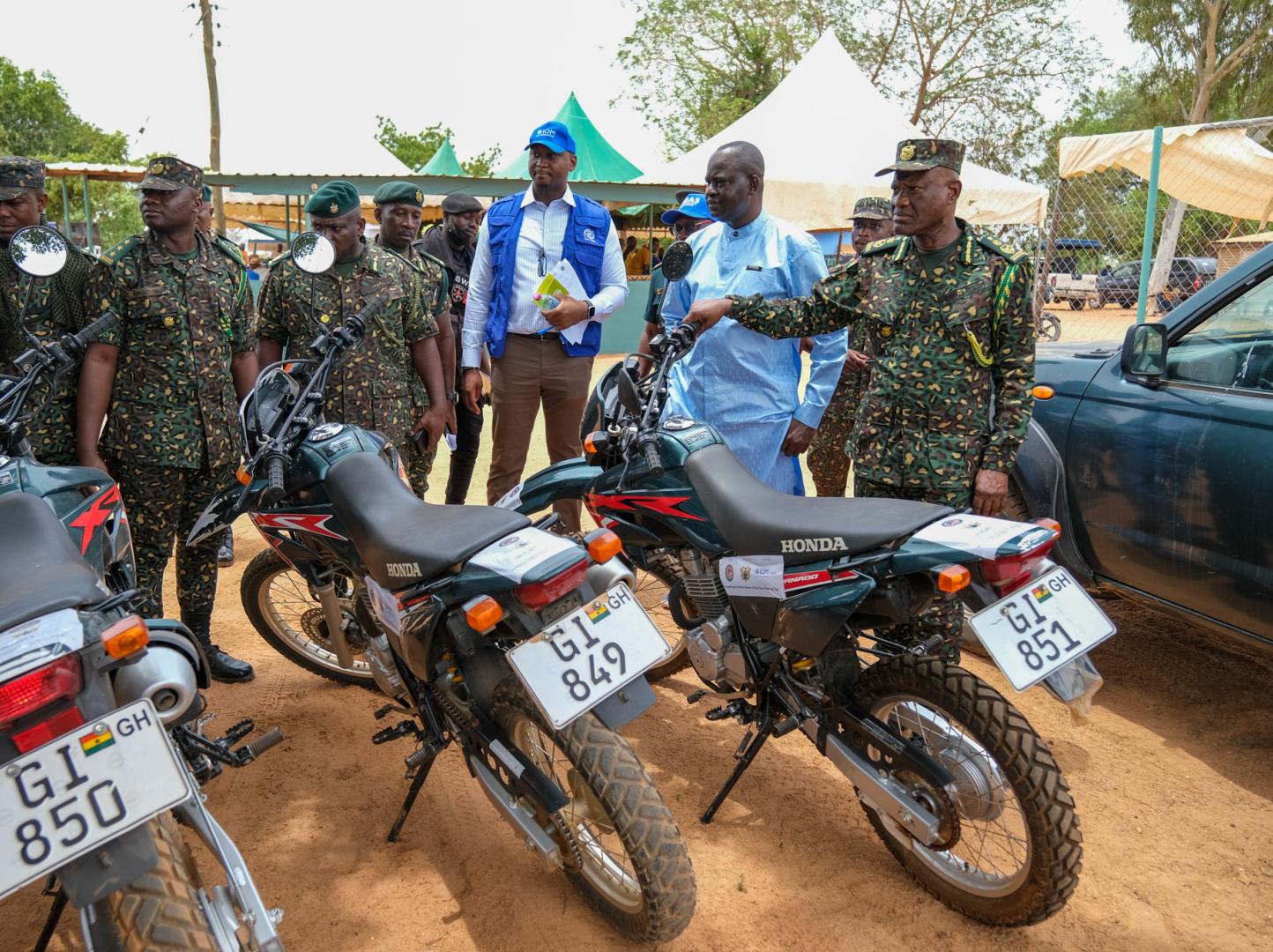
In a significant step to strengthen Ghana’s border security, the International Organization for Migration (IOM) Ghana handed over renovated border posts in Namoo, Mognori and Pulmakom in the Upper East Region of Ghana to the Ghana Immigration Service (GIS). The events took place on 29 and 30 May 2024. IOM continues to provide infrastructural support to Ghana as part of efforts to enhance the country’s immigration and border governance, thanks to funding from the Bureau of International Narcotics and Law Enforcement Affairs of the Government of the United States of America. Deputy Minister for the Interior, Hon. Naana Eyiah, emphasized the critical role of robust border management for maintaining national security and preventing transnational crime and irregular migration. "Strong borders are essential for national security. The Government is committed to investing in infrastructure, technology, and personnel to create a secure and efficient border environment that promotes regional integration and economic development," she stated.The upgraded facilities, equipped with the Migration Information and Data Analysis System (MIDAS) and a solar power supply system, will enable GIS officers to more effectively process travellers in a secure and timely manner. The border management information system MIDAS currently supports GIS border management operations at five land border crossings along Ghana’s northern borders, namely Hamile, Kulungugu, Namoo, Mognori and Pulmakom.Comptroller-General of the GIS, Mr. Kwame Asuah Takyi, urged officers to keep up their dedication to national safety. "The new facilities and equipment will significantly enhance our operational capabilities. I urge all officers to maintain the highest standards of professionalism and commitment to safeguarding our borders," he said.The Upper East Regional Minister, Hon. Hafiz Bin Salih, highlighted the positive impact of the renovations for the region. "By improving border security and reducing wait times, we are fostering an environment that supports economic growth through trade facilitation, especially for women small-scale cross-border traders, and regional integration. Lastly, I note that the new facilities are disability friendly, which is key to cater for all travellers," he noted. This initiative is part of the "Strengthening the Northern Borders of Côte d’Ivoire, Ghana and Togo" project which aims to reinforce border security and community engagement in the region.Officer in Charge representing the Chief of Mission of IOM Ghana and Senior Programme Manager of the Immigration and Border Governance (IBG) unit, Mr. Nnamdi Iwuora, reaffirmed IOM’s continued support in strengthening Ghana’s border security. "IOM remains committed to the Government of Ghana to ensure that our borders are well-equipped and secure. These renovations are but one measure in our ongoing collaboration with the Government through the Ministry of the Interior and GIS to enhance overall border governance," he said.GIS also received border patrol equipment, such as motorbikes, night vision goggles, tents, metal detectors and solar lamps, which will enhance the mobility and responsiveness of border patrol officers. Other interventions by IOM to support government’s effort to improve border security and community resilience include support for the creation of livelihood opportunities, community engagement activities, increasing access to legal identity such as the Ghana national biometric identity card also known as the “Ghana Card”, enhancing community and state interaction to improve trust relations through the setup of dialogue platforms, and reinforcing the capacity of emergency preparedness and response actors to better respond to humanitarian crisis.