Ghana Hosts Public Lecture to Mark UN’s 80th Anniversary, Spotlighting the Future of Multilateralism

Ghana marked the UN’s 80th anniversary with a public lecture on multilateralism, uniting diplomats, scholars, and youth to explore global cooperation’s future.
As part of global commemorations marking the 80th anniversary of the United Nations, the Legon Centre for International Affairs and Diplomacy (LECIAD) hosted a high-level public lecture under the theme “UN@80: The Future of Multilateralism.” The event convened diplomats, academics, students, and policy experts to reflect on Ghana’s enduring partnership with the UN and the evolving role of multilateral cooperation in addressing today’s global challenges.
Held at the University of Ghana, the lecture provided a timely platform for dialogue on the legitimacy, accountability, and participation within key UN bodies such as the Security Council, the International Court of Justice, the General Assembly, and specialized agencies. Discussions emphasized the need for renewed global cooperation, inclusive governance, and innovative approaches to ensure sustainable and resilient development across nations.
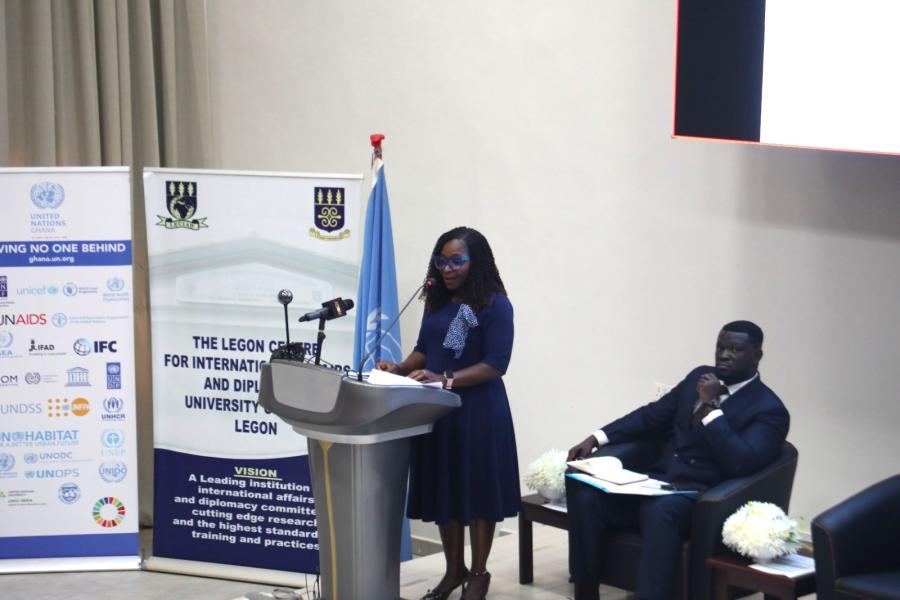
A Senior Research Fellow, Dr. Amanda Coffie, delivered a presentation exploring the theoretical underpinnings of international institutions and the shifting dynamics of global political development. Dr. Ken Ahorsu, also a Senior Research Fellow at LECIAD, addressed the implications of peace and conflict studies for multilateral diplomacy, highlighting the UN’s role in conflict prevention and resolution.
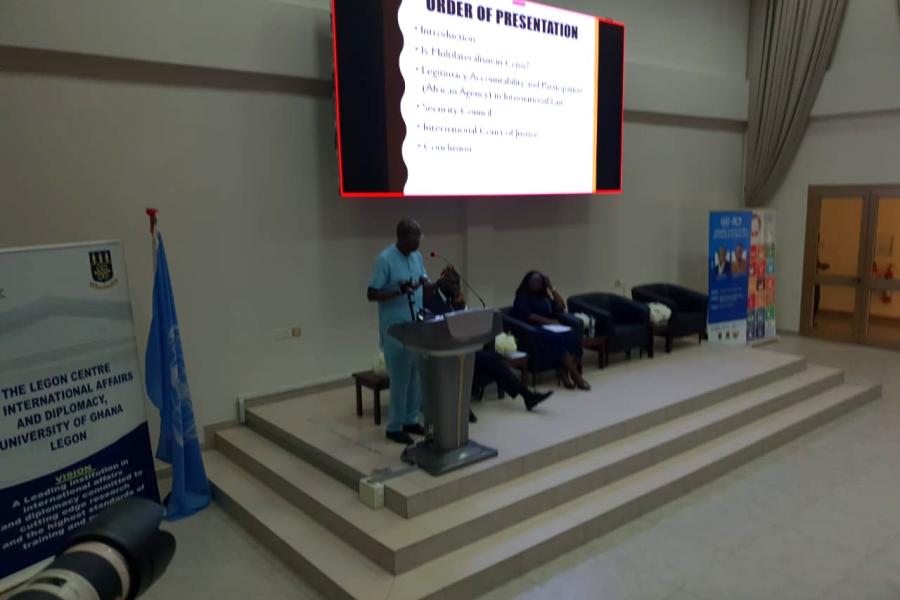
Participants engaged in robust dialogue, posing critical questions and sharing diverse perspectives on how multilateralism can adapt to emerging threats such as climate change, inequality, and geopolitical instability. The event also served as a reflective moment to honour the UN’s eight decades of contributions to peace, development, and human rights.

The lecture, funded by the United Nations in Ghana and supported by the Ministry of Foreign Affairs, reaffirmed Ghana’s commitment to multilateralism and the values of international cooperation. It brought forth the importance of youth engagement, academic discourse, and diplomatic collaboration in shaping the UN’s relevance in the 21st century.


Written by

UN entities involved in this initiative
Other entities involved in this initiative
Goals we are supporting through this initiative