UN Country Team engages Ghanaian youth to shape future development agenda

The engagement aimed to co-create youth-informed inputs for the new UNSDCF and other UN programming in Ghana.
Young people make up 38% of Ghana’s population, a demographic reality that reinforces their critical role in shaping the country’s development trajectory. Recognizing the critical importance of their voices, creativity, and energy, the United Nations in Ghana continues to champion meaningful youth engagement as a cornerstone of its work. For the UN, engaging young people goes beyond listening; it requires empowering them, co-creating solutions, building trust, and ensuring that youth are recognized as partners in development, not passive beneficiaries. This approach has become a recurring theme in national discussions involving young people.
To mark the UN’s 80th anniversary and in recognition of International Youth Day, observed annually in August, the UN Country Team (UNCT) placed Ghanaian youth at the heart of its commemorative activities. Under the theme “Shaping Our Shared Future,” the UN convened young people from across the country for a national youth engagement session aimed at generating youth-informed inputs to guide UN programming in Ghana.
The event also provided the platform to announce the establishment of a Youth Advisory Group, a mechanism designed to institutionalize youth participation in UN processes. This group will enable structured, consistent, and meaningful dialogue between young people and the UN, ensuring that youth perspectives shape decisions, policies, and solutions that directly affect them.
In a pre-recorded message, the UN Assistant Secretary-General for Youth Affairs, Dr. Felipe Paullier, urged young people to be bold and honest in their contributions. “Don’t only tell us what is working, but also tell us what is not working… The UN cannot improve what it does not hear,” he said. He encouraged the youth to view themselves as partners rather than guests and to hold the UN accountable in areas where improvement is needed.
.

The Minister for Youth Development and Empowerment, Hon. George Opare Addo, reaffirmed the government’s commitment to working closely with the UNCT and the Inter-Agency Working Group on Youth. He stressed on the need for programmes that are responsive, inclusive, impactful, and forward-looking. “The Government of Ghana recognizes the urgency of ensuring that youth voices, ideas, and aspirations are fully integrated into national and multilateral decision-making processes,” he stated

The UN Resident Coordinator, H.E. Zia Choudhury, echoed these sentiments, calling on young people to challenge outdated systems and collaborate meaningfully with decision-makers. “Youth is at the heart of the UN’s vision for Ghana. The Cooperation Framework positions youth empowerment as a cross-cutting accelerator because youth leadership is essential for progress in education, health and well-being, climate action, digital innovation, governance, and economic transformation,” he said.

During the engagement, participants raised critical issues of concern in breakout sessions designed to explore the programmatic objectives of the UN.

Adding depth to the dialogue, the Chief Executive Officer of the National Youth Authority, Osman Abdulai Ayariga, Esq., and the President of the Ghana Youth Federation and CEO of the Ghana Chamber of Young Entrepreneurs, Mr. Sherif Ghali, delivered insightful remarks that emphasized the importance of sustained youth participation in national development.
A highlight of the event was the announcement of the top three submissions of the UN Youth Innovate Challenge, an initiative of the UN in Ghana and powered by the UNITE Ideas platform to inspire youth-led solutions for a more inclusive and sustainable world. The selected projects were: “From Cashew Waste to Circular Power,” by Mr. Billton Nyarko followed by “KodeVR: Virtual Robotics For All,” by Mr. Jonathan Kennedy Sowah and Mr. Zenas Fiagbe’s “Eco-Africa App,” by Mr. Zenas Fiagbe.
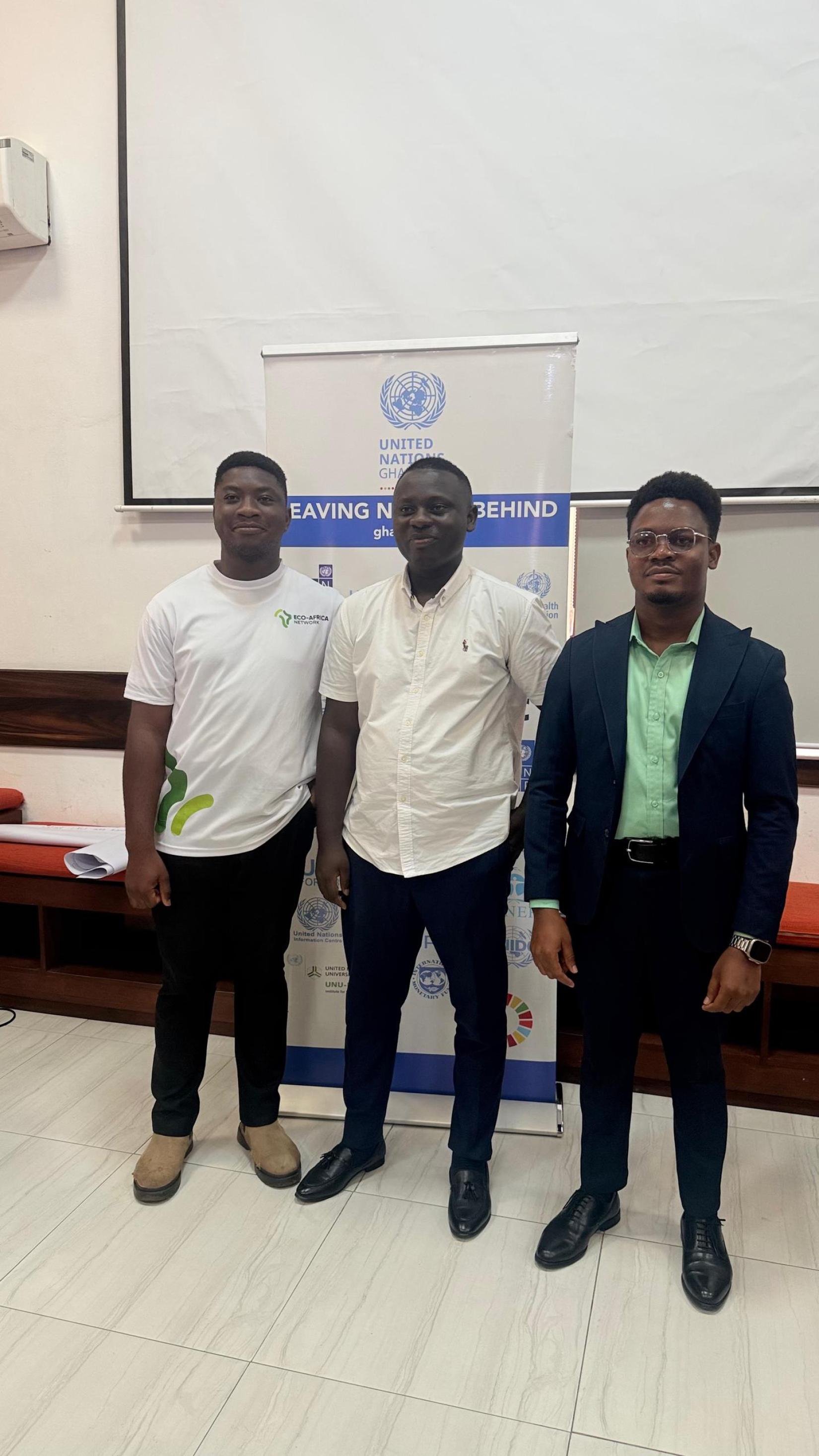
These initiatives clearly align with key frameworks including the UN Sustainable Development Cooperation Framework (2023–2025), the UN Youth Strategy (Youth2030), Ghana’s National Youth Policy, and the 2030 Agenda for Sustainable Development.
Through these efforts, the UN in Ghana reinforces its long-standing commitment to ensuring that young people are not only heard but are empowered as central actors in shaping Ghana’s shared future.


Written by

UN entities involved in this initiative
Goals we are supporting through this initiative